Why Do We Dream? A Kid-Friendly Look at the Science Behind Nighttime Stories
Why do we dream?
Almost every parent has heard it at breakfast: "I had the weirdest dream last night." Sometimes dreams are silly, sometimes magical, and sometimes upsetting enough that a child crawls into your bed before sunrise. It’s natural to wonder why do we dream, especially when we’re trying to help kids make sense of what their sleeping minds create.
Dreaming isn’t random nonsense. It’s something healthy brains do — especially growing ones. Understanding that can help parents respond with calm confidence, even after a nightmare.
A gentle curiosity hook: the brain never really sleeps
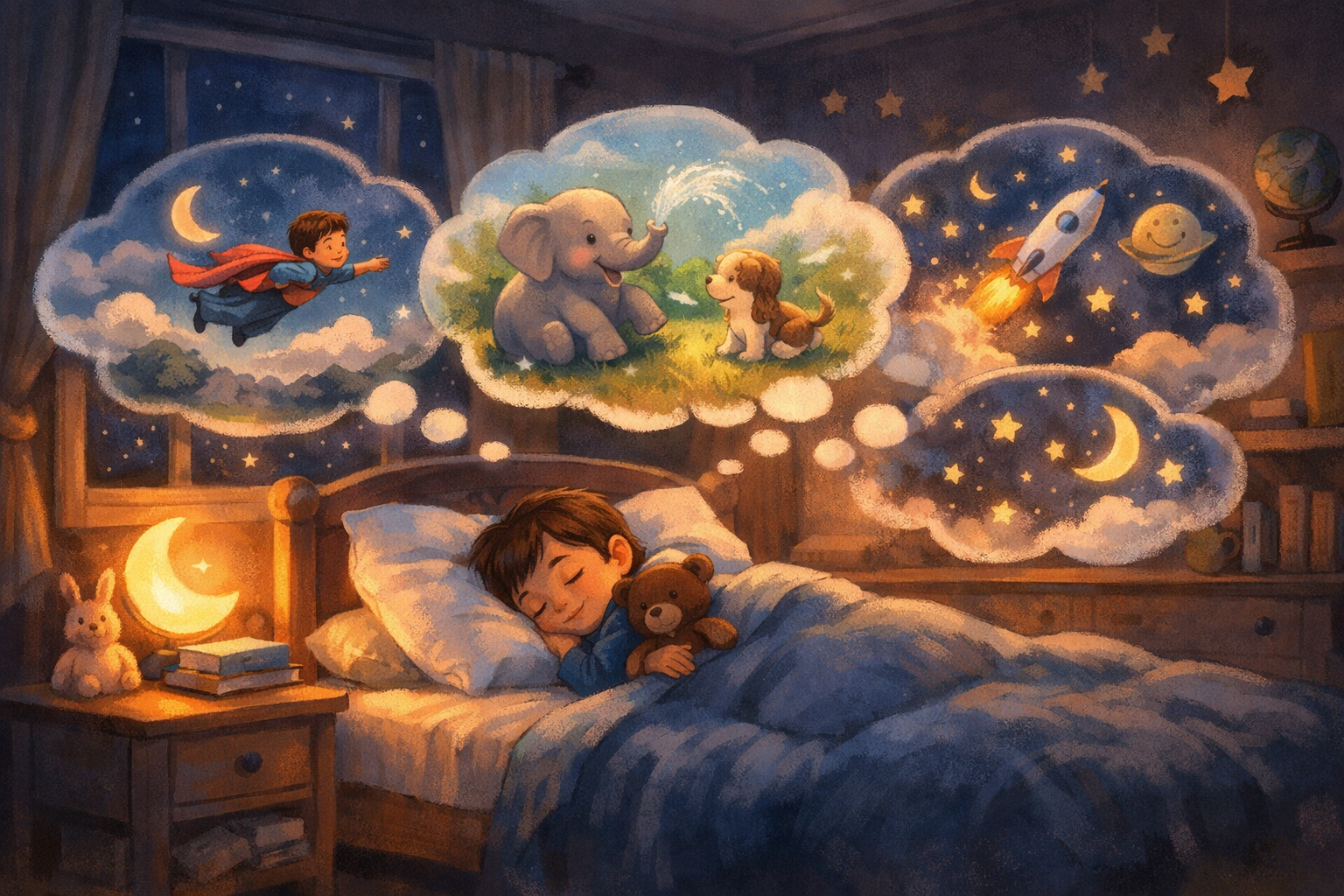
When your child falls asleep, their body rests — but their brain stays busy. During certain stages of sleep, especially REM (rapid eye movement) sleep, the brain becomes very active. That’s when most dreaming happens.
Think of sleep like a house at night. The lights are off, the doors are locked, but inside, a cleaning crew is quietly working. Dreams are part of that nighttime brain work.
The science behind dreams (made simple for parents)
Researchers don’t have one single answer to why we dream, but several strong ideas help paint the picture. Together, they show that dreaming supports learning, emotions, and imagination.
Here are the main reasons scientists believe we dream:
- Sorting memories: Dreams help the brain organize what happened during the day — what to keep, what to tuck away.
- Practicing emotions: Dreams give kids a safe space to feel excitement, fear, pride, or frustration without real-world consequences.
- Building creativity: Dreaming mixes ideas together in new ways, which supports imagination and problem-solving.
- Brain development: Children dream more than adults, likely because their brains are learning at such a rapid pace.
Dreams aren’t messages or predictions. They’re more like the brain stretching and tidying up.
The analogy that helps kids understand
The Analogy: Dreams are like your brain’s art room.
During the day, your child collects crayons — experiences, thoughts, worries, joys. At night, the brain spreads them out and starts drawing. Sometimes the picture makes sense. Sometimes it’s a funny mash-up of colors. But the act of drawing helps the brain grow stronger.
This analogy reassures kids that dreams don’t control reality — they’re just creative brain activity.
What children often misunderstand about dreams
Kids between ages 3 and 12 commonly believe:
- Dreams are real events that happened somewhere
- Bad dreams mean something bad will happen
- Thinking about something causes it to appear in dreams on purpose
These misunderstandings can make dreams feel scary or powerful.
A gentle correction: Dreams feel real because the brain uses the same emotion centers as waking life — but they’re made of thoughts, not actions.
The emotional lens: why dreams can feel so intense
Children’s emotional brains develop faster than their logic brains. That’s why dreams — especially nightmares — can feel overwhelming.
Dreams often pull from:
- New experiences (school, friendships, changes)
- Big feelings kids don’t yet have words for
- Stories, shows, or conversations they overheard
A nightmare doesn’t mean something is wrong. It usually means something is being processed.
The script: what to say when your child asks "Why did I dream that?"
"Dreams are stories your brain tells while it’s resting. They can be silly, exciting, or strange, but they can’t hurt you — and they don’t mean something bad will happen."
This kind of language offers reassurance without over-explaining.
Age-by-age: how understanding dreams grows
Ages 3–5: Dreams feel very real. Kids may need comfort and clear reassurance that they are awake and safe.
Ages 6–8: Kids begin to understand that dreams come from the mind, but emotions still linger strongly.
Ages 9–12: Children can grasp the idea that dreams reflect thoughts and feelings. They may enjoy analyzing or laughing about them.
Adjust explanations based on emotional maturity, not just age.
The micro-conversation after a bad dream
Child: "I dreamed you disappeared."
Parent: "That sounds really scary. Dreams can use our worries to make stories, even when everything is okay. I’m right here."
Naming the feeling first helps calm the nervous system.
A simple "Do": a daytime dream helper
Invite your child to draw a dream they remember — even a bad one. Then ask:
- "What would you change about this dream?"
- "How could it end in a happy or silly way?"
This gives kids a sense of control and helps the brain reframe fear.
A common parent pitfall
Trying to explain dreams too logically too fast.
When a child is upset, detailed neuroscience won’t land. Start with safety and comfort first. Explanations can come later.
Why do we dream, really?
So, why do we dream? Because growing brains need time to sort, feel, imagine, and heal. Dreams are signs of healthy mental activity — not problems to fix or mysteries to fear.
When parents treat dreams with curiosity instead of concern, children learn an important lesson: their thoughts and feelings are safe to explore, even at night.
And that’s a comforting idea to fall asleep with.
Start explaining the world today
Join thousands of parents who use Little Answers to turn 'Why?' into a moment of connection.